
Why SwissSparkle's Retinol Serum Is Different From Every Other Bottle You've Tried
Retinol Serum 101: The Beginner's Guide to India's Most Talked-About Anti-Ageing Ingredient (2026)
If you've spent even five minutes on skincare Instagram or asked a dermatologist what one ingredient actually works for fine lines, dullness, and uneven texture — the answer keeps coming back to the same word: retinol.
It's not a trend. It's one of the most researched anti-ageing ingredients in the world, and in 2026, more Indian skincare users are starting retinol earlier than ever — not to "fix" wrinkles, but to prevent them before they show up.
But here's the problem: most people either avoid retinol out of fear (peeling, redness, purging) or use it wrong and give up in two weeks. This guide breaks down exactly what retinol does, how to introduce it into your routine without irritation, and what to actually look for in a serum — so you get results instead of regret.
What Does Retinol Actually Do to Your Skin?
Retinol is a derivative of Vitamin A. Once absorbed, it works at the cellular level to:
- Speed up skin cell turnover — clearing away dull, dead surface skin faster
- Boost collagen production — the protein responsible for skin's firmness and bounce
- Unclog pores — which is why it's also used for acne-prone and congested skin
- Fade pigmentation and post-acne marks — by disrupting excess melanin clustering
- Soften fine lines and early wrinkles — by thickening the deeper layers of skin over time
The catch: none of this happens overnight. Retinol is a long-game ingredient, and understanding this upfront is what separates people who see real results from people who quit at week two.
Who Should Be Using Retinol?
You don't need to be 40 to start retinol. In fact, most dermatologists now recommend starting preventively in your mid-to-late 20s, especially if you deal with:
- Early fine lines or loss of skin bounce
- Uneven texture, enlarged pores, or dullness
- Post-acne marks and dark spots
- Occasional breakouts combined with visible ageing concerns
If you're a total beginner, the biggest mistake isn't choosing the wrong percentage — it's introducing retinol too aggressively, too fast.
How to Use Retinol Serum Without the Irritation (Step-by-Step)
This is the part most brands skip, and it's the reason so many people say "retinol didn't work for me" when really, they never gave their skin a fair chance.
- Start slow — 2 nights a week, not every night. Your skin needs to build tolerance.
- Always apply on completely dry skin — damp skin absorbs retinol faster and increases irritation risk.
- Use a pea-sized amount only. More product does not mean faster results — it means more irritation.
- Follow with a moisturiser to lock in hydration and buffer sensitivity.
- Never skip sunscreen the next morning. Retinol increases sun sensitivity — SPF isn't optional, it's mandatory.
- Gradually build up to nightly use over 4–6 weeks as your skin adjusts.
Do this consistently, and most users start noticing smoother texture and a visible glow within 3–4 weeks, with more defined results around the 8–12 week mark — because that's how long it takes for new collagen and skin turnover to actually show on the surface.
What to Look for in a Retinol Serum (So You Don't Waste Money)
Not all retinol serums are created equal, and in a market flooded with options, here's what actually matters:
- The right concentration for your experience level — beginners should avoid jumping straight to high percentages
- A stabilised formulation — unstable retinol degrades quickly in Indian heat and humidity, meaning you're not getting the concentration promised on the label
- Supporting ingredients that buffer irritation without cancelling out retinol's effectiveness
- Lightweight, non-greasy texture — heavy, sticky serums discourage consistent use, and consistency is everything with retinol
- No unnecessary fragrance or alcohol that can compound sensitivity during the adjustment phase
Why SwissSparkle Retinol 0.6% Serum Is Built Differently
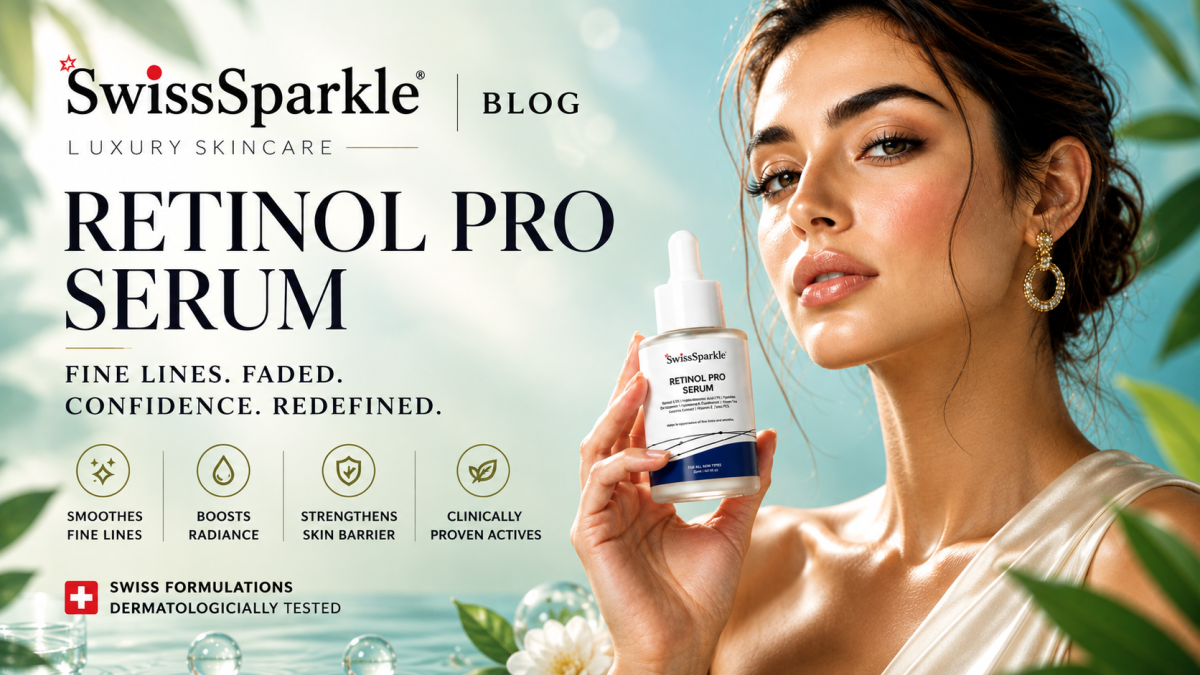
SwissSparkle's Retinol 0.6% Serum was formulated specifically with these real-world usage problems in mind — not just to look good on an ingredient list.
✅ 0.6% stabilised retinol — strong enough to deliver visible results, formulated to hold up against heat and humidity so what's on the label is what reaches your skin
✅ Lightweight, fast-absorbing texture — no greasy residue, no pilling under moisturiser or sunscreen
✅ Buffered formulation — designed to minimise the redness and flaking that stops most beginners from sticking with retinol long enough to see results
✅ Suitable for nightly use once tolerance builds — engineered for consistency, not just a one-time "wow" effect
✅ Dermatologically mindful formulation — built for Indian skin types and climate conditions, not adapted from a Western formula as an afterthought
If you've tried retinol before and given up because of irritation, or you've never started because the whole category feels intimidating, this is the serum built to change that experience.
The Real Reason Most People Don't See Retinol Results
It's rarely the ingredient's fault. It's almost always one of these three things:
- Inconsistent use — retinol needs weeks of regular application, not occasional use
- Skipping sunscreen — undoing progress by allowing UV damage to continue unchecked
- Using an unstable or poorly formulated serum — where the retinol has already degraded before it even reaches your skin
Fix these three things, and retinol becomes one of the highest-ROI steps in your entire skincare routine.
Ready to Start Your Retinol Journey the Right Way?
Skincare doesn't need to be complicated — it needs to be consistent, and it needs a formula you can actually trust.
👉 Shop SwissSparkle Retinol 0.6% Serum — formulated for visible results, without the guesswork.
Frequently Asked Questions
Q: Can I use retinol every day as a beginner? No — start with 2 nights a week and gradually build up to nightly use over 4–6 weeks as your skin builds tolerance.
Q: Can I use retinol and Vitamin C together? Not in the same routine session. Use Vitamin C in the morning and retinol at night to avoid irritation and keep both ingredients effective.
Q: How long before I see results from retinol serum? Early improvements in texture and glow typically appear around 3–4 weeks, with more visible results around 8–12 weeks of consistent use.
Q: Is retinol safe for sensitive or acne-prone skin? Yes, when introduced gradually with a well-formulated, buffered serum — many acne-prone users see reduced breakouts and faded post-acne marks over time.
Q: Do I really need sunscreen if I use retinol only at night? Yes, always. Retinol increases skin's sun sensitivity for the full next day, regardless of when it was applied.
Disclaimer: Individual results may vary based on skin type, consistency of use, and environmental factors. Always patch test new actives and consult a dermatologist if you have specific skin concerns.