
Understanding SPF and Sun Protection: Everything You Need to Know
What is SPF?
SPF stands for Sun Protection Factor. It measures how well a sunscreen protects your skin from UVB rays, which cause sunburn and contribute to skin cancer. However, SPF doesn't measure protection against UVA rays, which cause premature aging.
How SPF Works
SPF is a multiplier of how long you can stay in the sun without burning. For example:
- If you normally burn in 10 minutes without sunscreen
- SPF 30 would theoretically protect you for 30 × 10 = 300 minutes
- However, this is under perfect conditions and doesn't account for sweating, swimming, or rubbing
SPF Numbers Explained:
SPF 15: Blocks about 93% of UVB rays. Not recommended for daily use - too low for adequate protection.
SPF 30 :Blocks about 97% of UVB rays. This is the minimum recommended by dermatologists for daily use.
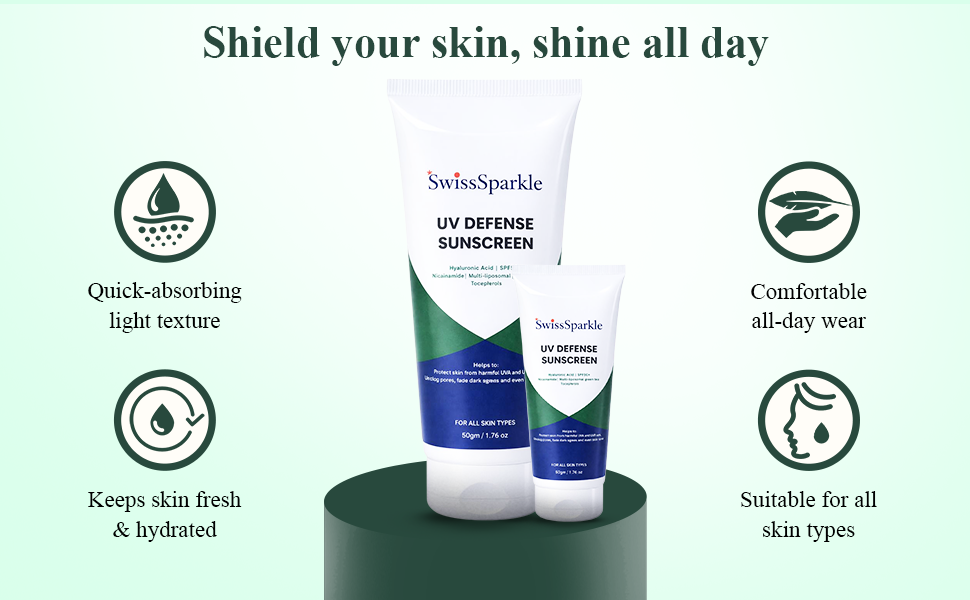
SPF 50:Blocks about 98% of UVB rays. This is the sweet spot for most people - our UV Defense Sunscreen offers SPF 50+ protection.
SPF 100+:Only blocks about 99% of UVB rays - not significantly more than SPF 50. The higher number can give a false sense of security.
Why Broad-Spectrum Matters
SPF only measures UVB protection. You need "broad-spectrum" protection to guard against both UVB (burning) and UVA (aging) rays. Look for products labeled "broad-spectrum" or containing ingredients like zinc oxide, titanium dioxide, or avobenzone.
How Much Sunscreen to Apply
Most people apply only 25-50% of the recommended amount. For adequate protection, you need:
- Face and neck: About 1/4 teaspoon (roughly two finger lengths)
- Full body: About 1 ounce (a shot glass full)
When and How Often to Reapply
Apply 15-30 minutes before sun exposure
Reapply every 2 hours when outdoors
Reapply immediately after swimming or heavy sweating
Reapply after towel drying
Even on cloudy days - UV rays penetrate clouds
Physical vs Chemical Sunscreens
Physical (Mineral) Sunscreens: Contain zinc oxide or titanium dioxide. They sit on top of the skin and reflect UV rays. Pros: Less likely to cause irritation, work immediately. Cons: Can leave a white cast, may feel heavy.
Chemical Sunscreens: Contain ingredients like avobenzone, oxybenzone, or octinoxate. They absorb UV rays and convert them to heat. Pros: Lightweight, no white cast. Cons: Can cause irritation in sensitive skin, need 15-20 minutes to activate.
Our Recommendation: https://swisssparkle.in/products/uv-defense-sunscreen-spf-50
Our UV Defense Sunscreen provides SPF 50+ broad-spectrum protection with a lightweight, non-greasy formula that works beautifully under makeup. It's suitable for all skin types and doesn't leave a white cast.
Common Sunscreen Myths Debunked
Myth 1: "I don't need sunscreen on cloudy days"
False: Up to 80% of UV rays penetrate clouds. You need protection every day.
Myth 2: "Higher SPF means I can stay in the sun longer"
False: You still need to reapply every 2 hours regardless of SPF number.
Myth 3: "I have dark skin, so I don't need sunscreen"
False: While darker skin has more natural protection, everyone needs sunscreen to prevent skin cancer and premature aging.
Myth 4: "Makeup with SPF is enough"
False: You'd need to apply 7-14 times the normal amount of makeup to get the stated SPF protection. Always use a dedicated sunscreen.
Sun Protection Beyond Sunscreen
- Seek shade during peak hours (10 AM - 4 PM)
- Wear protective clothing (long sleeves, pants)
- Wear a wide-brimmed hat
- Wear UV-blocking sunglasses
- Use UV-protective window film on your car
Conclusion:
Sunscreen is the most important skincare product you can use. It prevents skin cancer, premature aging, and hyperpigmentation. Make SPF 30+ broad-spectrum sunscreen a non-negotiable part of your daily routine, rain or shine.